How to Buy Liquidation Pallets

How to Buy Liquidation Pallets. This guide is written for resellers, and it says what we would tell a customer on the phone. If you are working out how to buy liquidation pallets, the short version is below and the detail follows. Nothing here is a pitch for a particular load.
Decide what you are actually buying
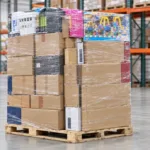
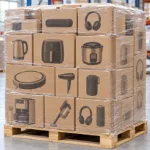
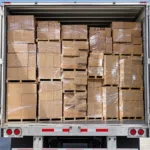
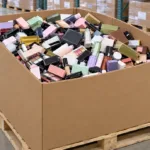
Before price, decide the category and the lot size. A mixed general merchandise pallet spreads risk across many small items. A single-category load concentrates it. A truckload lowers the per-unit cost and raises everything else: capital, floor space and the labour to break it down.
Be honest about your channel before you buy. Marketplace listings suit recognisable branded items. Bundles clear the middle. A market stall or bin store clears the long tail nobody wants to photograph individually.
Read the condition basis, not the headline
Every listing should say what condition basis it is sold on. Unmanifested means there is no itemised contents list. Customer returns means exactly that. Shelf pulls usually means the product is fine and the packaging is not. Overstock means unsold retail stock, which is generally the cleanest of the three.
If a listing does not state its basis, that is the answer. Treat any specific piece count on an unmanifested load as an estimate rather than a promise.
Work the maths on cost per unit, landed
Take the total price, add freight if it is not included, and divide by the low end of the stated count rather than the high end. That is your landed cost per unit. Then assume roughly a third sells well, a third sells slowly, and the rest clears in bulk or is written off, and check whether the price still works.
If the load only makes sense when nearly everything sells at full price, it is not a good load.
Sort out delivery before you order
Loads move by freight. You need somewhere for it to land and someone available to receive it. If you have no dock or forklift, arrange a liftgate in advance rather than discovering the problem when the truck arrives.
Inspect the outside of the load before the driver leaves. Damage written on the Bill of Lading can be claimed. Damage found after a clean signature cannot, because the carrier’s liability ends at that signature.
The questions worth asking before you pay
Is the load manifested, and if so what does the manifest actually list? Is freight included in the price shown? What is the claims window and what does it cover? Is the stock sold as-is? Are returns accepted for change of mind?
Those five answers are your entire risk profile. If a seller answers all five plainly, you know what you are buying even without knowing what is inside. If they answer none of them, the contents are the least of your problems.
Warning signs worth walking away from
A stated retail value on unmanifested goods. Photographs of specific high-value items described as representative. Countdown timers and stock-scarcity language on a product that arrives by the truckload. Freight quoted only after payment.
Also watch for policies that contradict the product. A seller who promises the load is fully resalable while also selling it as-is unmanifested has written two things that cannot both be true, and you will find out which one they meant when you file a claim.
Scaling up without getting stuck
Sell the first load through before buying the second. Count your actual hours and your actual realised revenue, not the total of your listing prices. Most people who lose money on liquidation lose it by buying the second load on the excitement of the first rather than its results.
Once a category is proven, buying larger loads in that same category lowers your cost per unit and your variance at the same time. Truckloads make sense at that point and not before.
How to buy liquidation pallets: the short answer
If you take one thing from this page, take this: the price of a liquidation load is the payment for work nobody has done to it. Nothing is opened, graded or sorted before it ships, and that is exactly why it costs what it costs. Judge every load on landed cost per unit, assume a share of it will not sell, and buy from a seller whose terms are written down before you pay.
Where to go next
To see live loads, the category pages list everything we currently have, with the condition basis and the price on each listing. Our other guides cover pricing, freight and the red flags worth walking away from, and the glossary defines every term used above. Our full shipping and returns terms are published in full, which is the same standard we suggest you hold any seller to when working out how to buy liquidation pallets.